
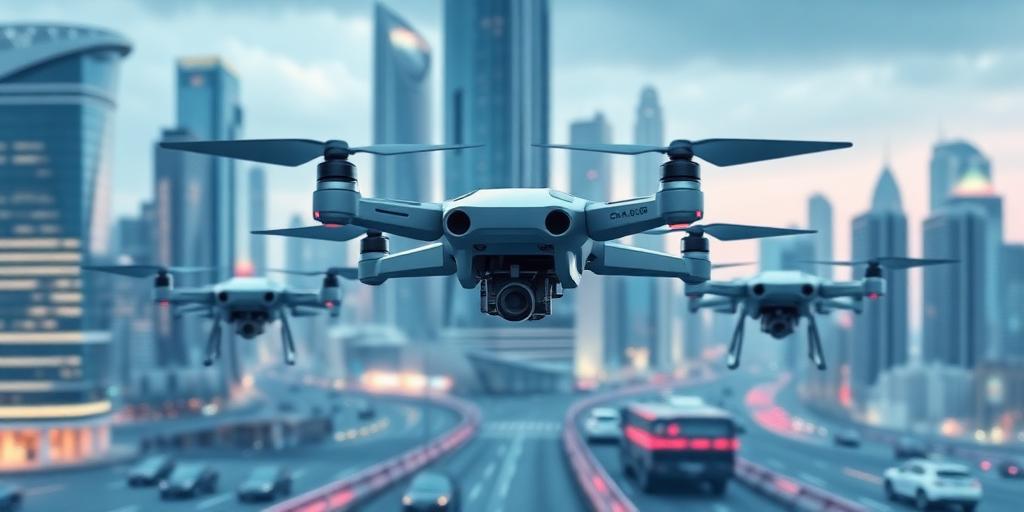
Autonomous Drones and Their Civilian Uses
Autonomous drones represent a significant leap in aviation technology, extending beyond military applications into various civilian sectors. These unmanned aerial vehicles (UAVs), capable of operating without direct human control, are poised to revolutionize industries ranging from agriculture to logistics. This article examines the current state of autonomous drone technology and its emerging civilian applications.
Technological Advancements
Recent progress in artificial intelligence, sensor technology, and battery life has propelled the development of autonomous drones. Modern drones utilize sophisticated algorithms for navigation, obstacle avoidance, and decision-making. Key components include:
- Advanced Sensors: High-resolution cameras, LiDAR, and infrared sensors enable drones to perceive their environment accurately.
- AI-Driven Navigation: Machine learning algorithms allow drones to plan routes, adapt to changing conditions, and avoid collisions.
- Improved Battery Life: Lithium-ion and solid-state batteries provide extended flight times, enhancing operational efficiency.
Civilian Applications
The versatility of autonomous drones makes them suitable for a wide array of civilian tasks:
- Agriculture: Autonomous drones can monitor crop health, detect pests, and optimize irrigation. Equipped with multispectral cameras, they provide valuable data for precision farming, enhancing yields and reducing resource consumption.
- Delivery and Logistics: Companies are exploring drones for last-mile delivery, especially in urban areas where traffic congestion poses a challenge. Autonomous drones can transport packages quickly and efficiently, reducing delivery times and costs.
- Infrastructure Inspection: Inspecting bridges, power lines, and pipelines is a labor-intensive and hazardous task. Drones equipped with high-resolution cameras and sensors can perform these inspections remotely, identifying potential issues before they escalate into major problems.
- Search and Rescue: In emergency situations, autonomous drones can quickly survey large areas, locating missing persons and assessing damage. Their ability to operate in challenging environments makes them invaluable tools for first responders.
- Environmental Monitoring: Drones can collect data on air and water quality, monitor deforestation, and track wildlife populations. This information is crucial for environmental conservation and sustainable resource management.
Regulatory and Ethical Considerations
As autonomous drone technology advances, regulatory frameworks must adapt to ensure safe and responsible use. Key considerations include:
- Airspace Management: Clear regulations are needed to manage drone traffic, especially in crowded airspace. This includes establishing no-fly zones and implementing systems for tracking and identifying drones.
- Privacy Concerns: The use of drones equipped with cameras raises privacy issues. Regulations should address data collection, storage, and usage to protect individuals' privacy rights.
- Safety Standards: Robust safety standards are necessary to prevent accidents and ensure that drones operate reliably. This includes mandatory testing and certification for drone hardware and software.
Future Outlook
The future of autonomous drones in civilian applications is promising. As technology matures and regulatory frameworks evolve, we can expect to see wider adoption of drones in various sectors. Further advancements in AI, sensor technology, and battery life will enhance their capabilities, making them even more versatile and efficient. Autonomous drones have the potential to transform industries, improve safety, and enhance our understanding of the world around us.


