
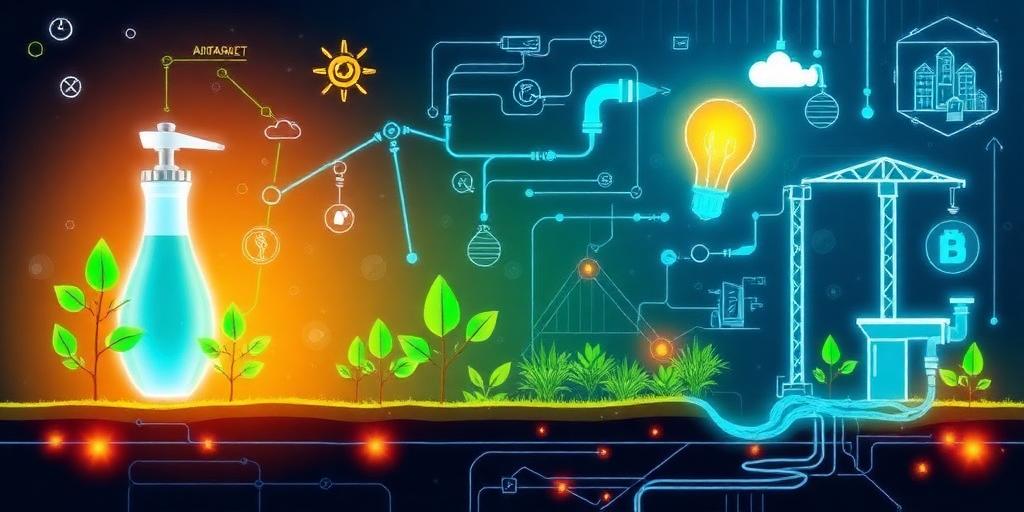
How IoT Improves Water and Energy Usage
The Internet of Things (IoT) is revolutionizing how we manage and conserve essential resources like water and energy. By connecting devices and systems, IoT provides real-time data and automation capabilities that lead to significant improvements in efficiency and sustainability. This article explores the various ways IoT enhances water and energy management across different sectors.
Smart Water Management
Water scarcity is a growing global concern, making efficient water management critical. IoT solutions offer innovative approaches to monitor and optimize water usage in agriculture, urban areas, and industrial processes.
- Smart Irrigation: IoT-enabled sensors monitor soil moisture, weather conditions, and plant health to determine precise irrigation needs. This data-driven approach minimizes water wastage by delivering the right amount of water at the right time. Studies have shown that smart irrigation systems can reduce water consumption by up to 50% compared to traditional methods.
- Leak Detection: Water distribution networks often suffer from leaks, leading to substantial losses. IoT sensors can detect leaks in real-time by monitoring pressure changes and flow rates in pipelines. Early detection allows for prompt repairs, preventing further water loss and infrastructure damage.
- Water Quality Monitoring: IoT sensors continuously monitor water quality parameters such as pH levels, turbidity, and chemical contaminants. This ensures that water supplies meet regulatory standards and are safe for consumption. Real-time monitoring enables timely intervention and prevents potential health hazards.
- Smart Metering: Smart water meters provide detailed insights into water consumption patterns at the household and industrial levels. This data empowers consumers to make informed decisions about their water usage and identify opportunities for conservation. Utility companies can also use smart meter data to optimize water distribution and detect anomalies.
Smart Energy Management
Energy efficiency is crucial for reducing carbon emissions and mitigating climate change. IoT technologies offer a range of solutions to optimize energy consumption in buildings, industries, and power grids.
- Smart Buildings: IoT-enabled building management systems (BMS) monitor and control various aspects of energy consumption, including lighting, HVAC, and appliances. By analyzing occupancy patterns and environmental conditions, BMS can automatically adjust energy usage to minimize waste. Smart buildings can reduce energy consumption by up to 30% compared to conventional buildings.
- Industrial Energy Optimization: Industrial processes are often energy-intensive, presenting significant opportunities for optimization. IoT sensors monitor energy consumption at various stages of production, identifying inefficiencies and potential areas for improvement. Real-time data enables predictive maintenance, reducing downtime and improving overall energy efficiency.
- Smart Grids: IoT plays a vital role in enabling smart grids, which are more resilient and efficient than traditional power grids. Smart grid technologies include smart meters, advanced sensors, and communication networks that allow for real-time monitoring and control of electricity flow. This enhances grid stability, reduces transmission losses, and facilitates the integration of renewable energy sources.
- Renewable Energy Management: IoT solutions optimize the performance of renewable energy systems such as solar and wind farms. Sensors monitor weather conditions, equipment status, and energy output, enabling predictive maintenance and maximizing energy generation. Real-time data also helps grid operators manage the intermittent nature of renewable energy sources.
Benefits of IoT in Water and Energy Management
The adoption of IoT in water and energy management offers numerous benefits:
- Increased Efficiency: IoT-enabled systems optimize resource usage by providing real-time data and automation capabilities.
- Reduced Costs: By minimizing waste and improving operational efficiency, IoT solutions lead to significant cost savings.
- Enhanced Sustainability: IoT promotes sustainable practices by conserving water and energy resources.
- Improved Monitoring: Real-time monitoring enables early detection of leaks, anomalies, and potential issues, allowing for timely intervention.
- Data-Driven Decision Making: IoT provides valuable data insights that empower informed decision-making and continuous improvement.
Challenges and Considerations
While the benefits of IoT in water and energy management are substantial, there are also challenges to consider:
- Data Security: IoT devices collect and transmit sensitive data, making them vulnerable to cyberattacks. Robust security measures are essential to protect data privacy and prevent unauthorized access.
- Interoperability: Ensuring that different IoT devices and systems can communicate and exchange data seamlessly is crucial for effective integration.
- Scalability: IoT solutions must be scalable to accommodate the growing number of connected devices and the increasing volume of data.
- Cost of Implementation: The initial investment in IoT infrastructure can be significant. However, the long-term cost savings and benefits often outweigh the upfront expenses.
Conclusion
The Internet of Things is transforming water and energy management by providing real-time data, automation, and optimization capabilities. From smart irrigation systems to smart grids, IoT solutions offer innovative approaches to conserve resources, reduce costs, and enhance sustainability. Despite the challenges, the benefits of IoT in water and energy management are undeniable, making it a crucial technology for building a more sustainable future.


