
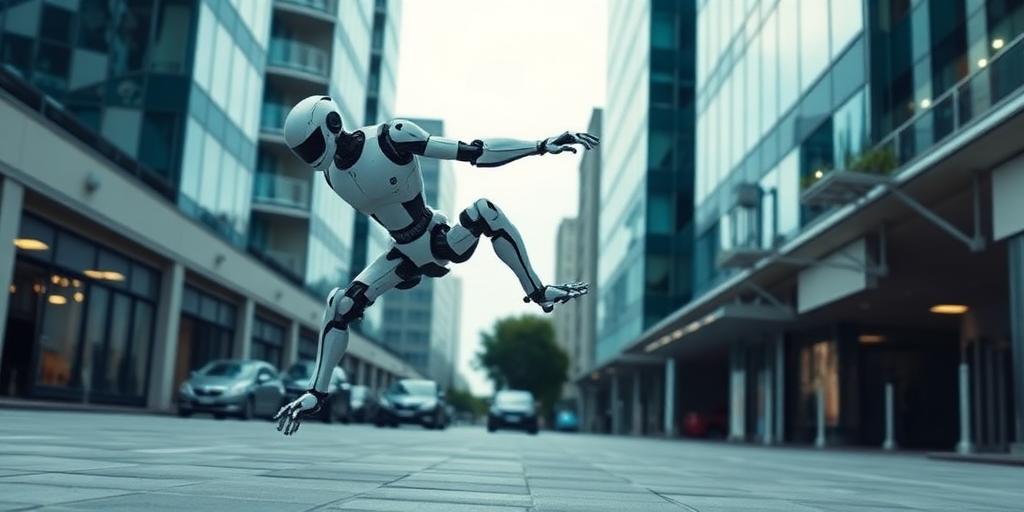
Boston Dynamics has long been at the forefront of robotics, capturing global attention with its dynamic and often awe-inspiring robots. While their quadruped robot, Spot, has found commercial applications in various industries, the company's advancements in humanoid robotics are particularly noteworthy when considering the future of automation and human-machine interaction. This article delves into the current state of Boston Dynamics' humanoid projects, assesses their potential impact, and explores the ethical and societal implications that arise as these technologies mature.
The Atlas Project: A Benchmark in Humanoid Robotics
Atlas, Boston Dynamics' flagship humanoid robot, represents a significant leap in robotics engineering. Its ability to perform complex maneuvers, maintain balance in challenging terrains, and even recover from disturbances showcases the remarkable progress made in dynamic control systems and actuator technology. Recent demonstrations have shown Atlas performing parkour, highlighting its agility and adaptability.
Key Technical Achievements:
- Dynamic Balance and Control: Atlas utilizes sophisticated algorithms to maintain balance, enabling it to walk, run, and jump with human-like dexterity.
- Advanced Actuation: The robot's electric and hydraulic actuators allow for precise and powerful movements, contributing to its agility.
- Perception and Navigation: Equipped with sensors and cameras, Atlas can perceive its environment and navigate complex spaces.
Potential Applications Across Industries
While still in development, the potential applications of humanoid robots like Atlas are vast. Several industries stand to be transformed:
- Search and Rescue: Humanoid robots can access dangerous or inaccessible areas, aiding in search and rescue operations.
- Manufacturing: They can perform repetitive or physically demanding tasks on production lines, increasing efficiency and reducing workplace injuries.
- Construction: Humanoid robots can assist in construction projects, handling heavy materials and performing tasks in hazardous environments.
- Logistics: They can automate warehouse operations, improving order fulfillment and reducing delivery times.
Ethical and Societal Considerations
As humanoid robots become more capable and integrated into society, several ethical and societal considerations must be addressed:
- Job Displacement: The automation of tasks by robots could lead to job losses in various industries, requiring proactive measures for workforce retraining and adaptation.
- Safety: Ensuring the safety of humans working alongside robots is crucial. Robust safety protocols and fail-safe mechanisms are necessary to prevent accidents.
- Privacy: As robots become more integrated into our lives, concerns about data privacy and surveillance must be addressed.
- Bias and Fairness: Ensuring that robots are designed and programmed in a way that avoids bias and promotes fairness is essential.
The Path Forward: Collaboration and Innovation
The future of humanoid robotics hinges on continued collaboration between researchers, industry professionals, and policymakers. Addressing the technical challenges, ethical considerations, and societal implications will pave the way for responsible innovation and the successful integration of humanoid robots into our lives. Boston Dynamics' advancements serve as a catalyst for further exploration and development, promising a future where robots and humans work together to solve complex problems and improve the quality of life.


