
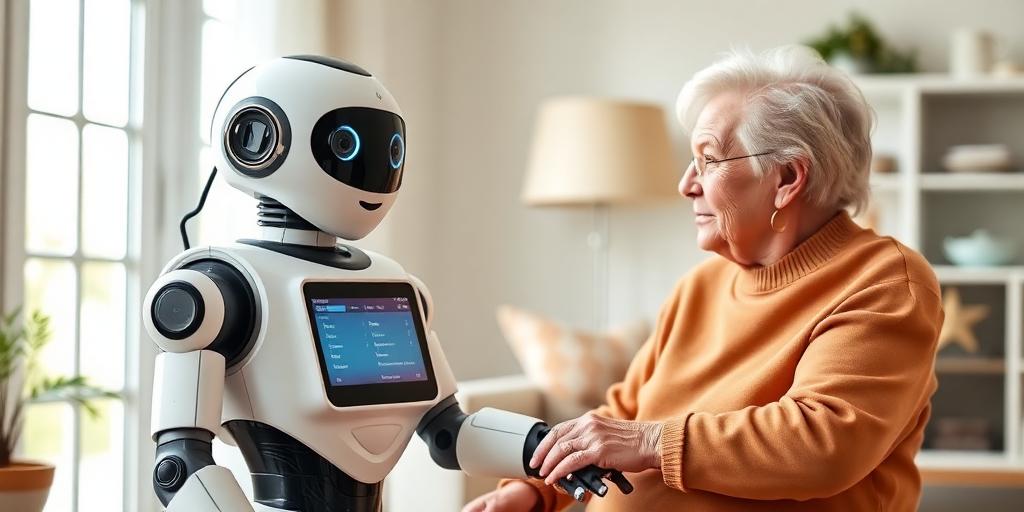
Companion Robots: The Future of Elderly Care
As the global population ages, innovative solutions are needed to address the increasing demands of elderly care. Companion robots are emerging as a promising technology, offering support, companionship, and enhanced safety for seniors. This article explores the potential of companion robots in revolutionizing elderly care, examining their capabilities, benefits, and challenges.
The Rise of Companion Robots
Companion robots are designed to provide social interaction and assistance to elderly individuals. These robots are equipped with advanced sensors, artificial intelligence, and communication capabilities. They can perform various tasks, including:
- Medication reminders: Ensuring timely medication intake.
- Fall detection: Alerting caregivers in case of falls.
- Social interaction: Engaging in conversations and providing emotional support.
- Activity monitoring: Tracking daily activities and detecting anomalies.
- Remote monitoring: Allowing caregivers to check on seniors remotely.
Benefits of Companion Robots in Elderly Care
Companion robots offer numerous benefits for elderly individuals and their caregivers:
- Enhanced Independence: Companion robots enable seniors to maintain their independence by providing assistance with daily tasks and reducing reliance on human caregivers.
- Improved Social Interaction: Social isolation is a significant concern for the elderly. Companion robots can alleviate loneliness by engaging seniors in conversations, playing games, and providing a sense of connection.
- Increased Safety: Companion robots can detect falls, monitor vital signs, and alert caregivers in case of emergencies, ensuring the safety and well-being of seniors.
- Reduced Caregiver Burden: Companion robots can assist with routine tasks, freeing up caregivers to focus on more complex and demanding aspects of care.
- Cost-Effectiveness: In the long term, companion robots can reduce the costs associated with traditional elderly care by minimizing the need for constant human supervision.
Challenges and Considerations
Despite their potential, the adoption of companion robots in elderly care faces several challenges:
- Cost: The initial cost of purchasing and maintaining companion robots can be a barrier for many families.
- Technological Acceptance: Some seniors may be hesitant to embrace new technologies and may find it challenging to interact with robots.
- Privacy Concerns: The use of sensors and data collection raises privacy concerns that need to be addressed through robust security measures.
- Ethical Considerations: Ensuring that companion robots are used ethically and do not replace human interaction is crucial.
- Regulatory Framework: Clear regulations and guidelines are needed to govern the development, deployment, and use of companion robots in elderly care.
The Future of Elderly Care with Companion Robots
Companion robots are poised to play a significant role in the future of elderly care. Ongoing advancements in AI, robotics, and sensor technology will enhance the capabilities of these robots, making them more versatile and user-friendly. As costs decrease and awareness increases, companion robots are expected to become an increasingly common feature in elderly care settings.
Conclusion
Companion robots offer a promising solution to the challenges of elderly care, providing support, companionship, and enhanced safety for seniors. While challenges remain, the potential benefits of these technologies are undeniable. By addressing the ethical, privacy, and regulatory considerations, we can harness the power of companion robots to improve the quality of life for elderly individuals and transform the future of elderly care.


