
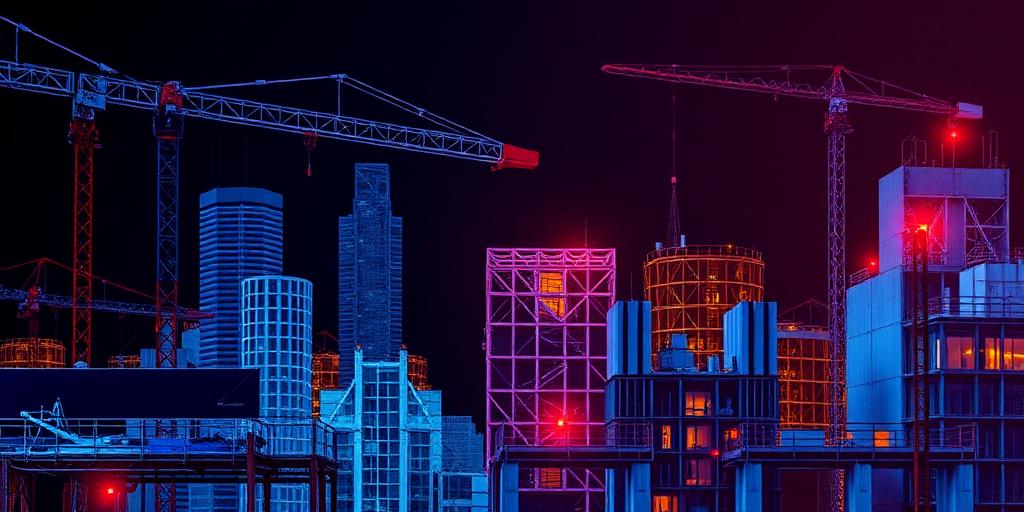
The Future of Construction: 3D Printing and Smart Materials
The construction industry is on the cusp of a technological revolution, driven by innovations in 3D printing and smart materials. These advancements promise to reshape how we design, build, and maintain structures, offering unprecedented efficiency, sustainability, and customization.
3D Printing in Construction: A Paradigm Shift
3D printing, also known as additive manufacturing, involves building three-dimensional objects from digital designs by layering materials. In construction, this technology utilizes large-scale 3D printers capable of constructing entire buildings or significant structural components. The implications are profound:
- Accelerated Construction: 3D printing significantly reduces construction time. Automated processes enable rapid prototyping and on-site manufacturing, slashing project timelines.
- Cost Reduction: By minimizing material waste and labor requirements, 3D printing can lead to substantial cost savings. Precise material deposition reduces excess, and automated systems decrease the need for large construction crews.
- Design Flexibility: 3D printing allows for intricate and customized designs that would be challenging or impossible to achieve with traditional methods. This opens new possibilities for architectural innovation and unique building forms.
- Sustainability: The use of sustainable materials, such as recycled concrete or bio-based polymers, in 3D printing enhances the environmental footprint of construction projects. Reduced transportation of materials further contributes to sustainability.
Smart Materials: Building the Intelligent Infrastructure
Smart materials are designed to respond to environmental stimuli, such as temperature, pressure, or light, altering their properties in a predictable manner. Their integration into construction offers enhanced performance, safety, and durability:
- Self-Healing Concrete: This innovative material contains encapsulated bacteria that activate upon cracking, precipitating calcium carbonate to repair the damage. Self-healing concrete extends the lifespan of structures and reduces maintenance costs.
- Thermochromic Materials: These materials change color in response to temperature variations, providing visual cues for energy management. They can be used in facades to optimize solar heat gain and reduce energy consumption.
- Shape Memory Alloys: These alloys can return to their original shape after being deformed, making them ideal for earthquake-resistant structures. They absorb and dissipate energy during seismic events, minimizing structural damage.
- Self-Sensing Materials: Integrating sensors into building materials enables real-time monitoring of structural health. These sensors can detect stress, strain, and corrosion, providing early warnings of potential failures.
Challenges and Opportunities
Despite the transformative potential, the adoption of 3D printing and smart materials in construction faces several challenges:
- Regulatory Hurdles: Building codes and regulations often lag behind technological advancements. Clear standards and certifications are needed to ensure the safety and reliability of these new methods.
- Scalability: Scaling up 3D printing for large-scale construction projects requires significant investment in equipment and infrastructure. Overcoming these logistical challenges is crucial for widespread adoption.
- Workforce Training: The integration of 3D printing and smart materials necessitates a skilled workforce capable of operating and maintaining these technologies. Training and education programs are essential to bridge the skills gap.
However, the opportunities are immense. As technology matures and costs decrease, 3D printing and smart materials will become increasingly integral to the construction industry. The result will be more efficient, sustainable, and resilient infrastructure that meets the evolving needs of society.
Conclusion
The convergence of 3D printing and smart materials represents a pivotal moment in construction history. By embracing these innovations, the industry can unlock new levels of efficiency, sustainability, and design flexibility, paving the way for a future where buildings are not only functional but also intelligent and responsive to their environment.


