
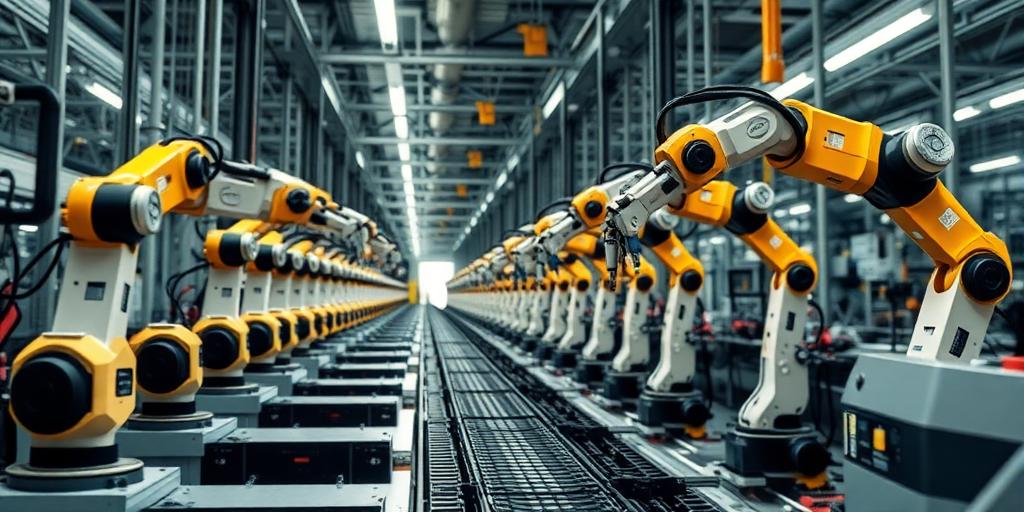
How Automation Is Transforming Manufacturing
Manufacturing is undergoing a significant transformation, driven by advancements in automation technologies. This shift is not merely about replacing human labor with machines; it's about creating smarter, more efficient, and more responsive production systems. In this post, we'll explore the key ways automation is reshaping the manufacturing landscape.
Enhanced Efficiency and Productivity
One of the primary benefits of automation is the dramatic increase in efficiency and productivity. Automated systems can operate continuously, 24/7, without the need for breaks or rest. This leads to higher production volumes and reduced lead times. Moreover, automated processes are typically more consistent and precise than manual operations, resulting in fewer defects and less waste.
Improved Quality Control
Automation plays a crucial role in enhancing quality control throughout the manufacturing process. Advanced sensors, cameras, and software algorithms can monitor production in real-time, detecting even the slightest deviations from the desired specifications. This enables manufacturers to identify and correct issues before they escalate into major problems, ensuring that products meet the highest quality standards.
Reduced Costs
While the initial investment in automation can be substantial, the long-term cost savings are often significant. Automation reduces labor costs, minimizes waste, and optimizes energy consumption. Additionally, it can lower inventory holding costs by enabling just-in-time production and reducing the risk of obsolescence.
Increased Flexibility and Agility
Modern automation technologies offer manufacturers greater flexibility and agility in responding to changing market demands. Programmable robots and flexible manufacturing systems can be quickly reconfigured to produce different products or adapt to new designs. This allows manufacturers to offer greater customization and personalization, while also reducing the time it takes to bring new products to market.
Enhanced Safety
Automation can improve worker safety by taking over tasks that are hazardous or physically demanding. Robots can handle heavy lifting, work in confined spaces, and operate in environments with extreme temperatures or toxic substances. This reduces the risk of accidents and injuries, creating a safer and healthier workplace for employees.
The Future of Manufacturing
As automation technologies continue to evolve, their impact on manufacturing will only grow. We can expect to see even greater integration of artificial intelligence, machine learning, and the Industrial Internet of Things (IIoT), leading to smarter, more autonomous, and more connected factories. This will enable manufacturers to achieve new levels of efficiency, quality, and flexibility, while also creating new opportunities for innovation and growth. The transformation is already underway, and manufacturers who embrace automation will be best positioned to succeed in the future.
Conclusion
Automation is revolutionizing manufacturing, driving improvements in efficiency, quality, cost, flexibility, and safety. By embracing these technologies, manufacturers can enhance their competitiveness, meet evolving customer demands, and create a more sustainable and prosperous future.


