
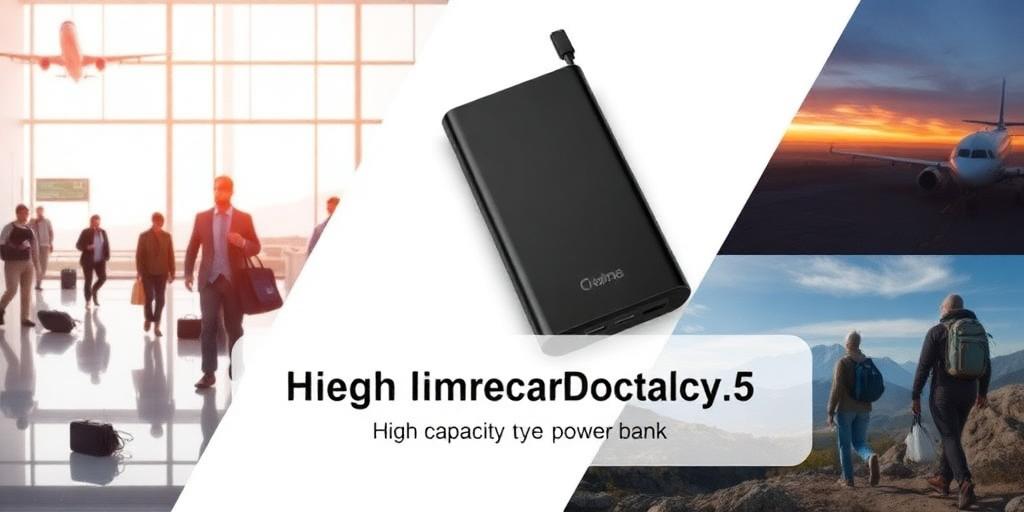
In an era dominated by mobile devices, the quest for reliable power sources has never been more critical. Power banks, once considered mere accessories, have evolved into indispensable tools for maintaining connectivity and productivity on the go. This discourse delves into the realm of high-capacity power banks engineered to sustain devices for extended periods, offering a comprehensive analysis of their capabilities, technological underpinnings, and practical applications.
Understanding Capacity and Efficiency: The longevity of a power bank is fundamentally determined by its capacity, measured in milliampere-hours (mAh). However, capacity alone does not dictate performance. The efficiency of power conversion, influenced by internal circuitry and battery technology, plays a pivotal role. High-quality power banks employ sophisticated power management systems to minimize energy loss during charging and discharging, thereby maximizing the number of full device charges achievable.
Key Features to Consider:
- Capacity: Power banks with capacities ranging from 20,000mAh to 30,000mAh are generally capable of providing multiple charges for smartphones, tablets, and even laptops. Models exceeding 30,000mAh offer unparalleled endurance, suitable for prolonged travel or situations where access to power outlets is limited.
- Charging Technology: Advanced power banks incorporate rapid charging technologies such as USB Power Delivery (PD) and Quick Charge (QC). These protocols enable faster charging times for both the power bank itself and connected devices, reducing downtime and enhancing usability.
- Port Configuration: The availability of multiple output ports, including USB-A and USB-C, allows for simultaneous charging of multiple devices. Furthermore, bidirectional USB-C ports facilitate both input and output, streamlining the charging process.
- Durability and Build Quality: Robust construction and high-quality materials ensure the power bank can withstand the rigors of daily use. Features such as drop resistance, overcharge protection, and temperature control enhance safety and prolong the lifespan of the device.
- Display and Indicators: Integrated displays provide real-time information on battery level, charging status, and output voltage. LED indicators offer a simplified alternative for quick visual assessment.
Applications and Use Cases:
The utility of high-capacity power banks extends across various domains:
- Travel: Ideal for long flights, road trips, and outdoor adventures where access to power sources is limited.
- Emergency Preparedness: Serves as a reliable backup power source during natural disasters, power outages, or other emergencies.
- Professional Use: Essential for professionals who rely on mobile devices for communication, productivity, and data access in the field.
- Outdoor Activities: Enables extended use of GPS devices, cameras, and other equipment for hiking, camping, and remote fieldwork.
Conclusion:
Power banks that last for days represent a significant advancement in mobile power technology. By understanding the critical factors influencing performance and considering the diverse applications, consumers can make informed decisions to select the optimal power solution for their specific needs. As technology continues to evolve, the role of high-capacity power banks in maintaining connectivity and productivity will only become more pronounced.


